
The ATM ecosystem is experiencing one of its most significant shifts in decades. Between regulatory deadlines, new encryption standards and the rise of more sophisticated cyberattacks, financial institutions face a complex security environment that demands both awareness and action.
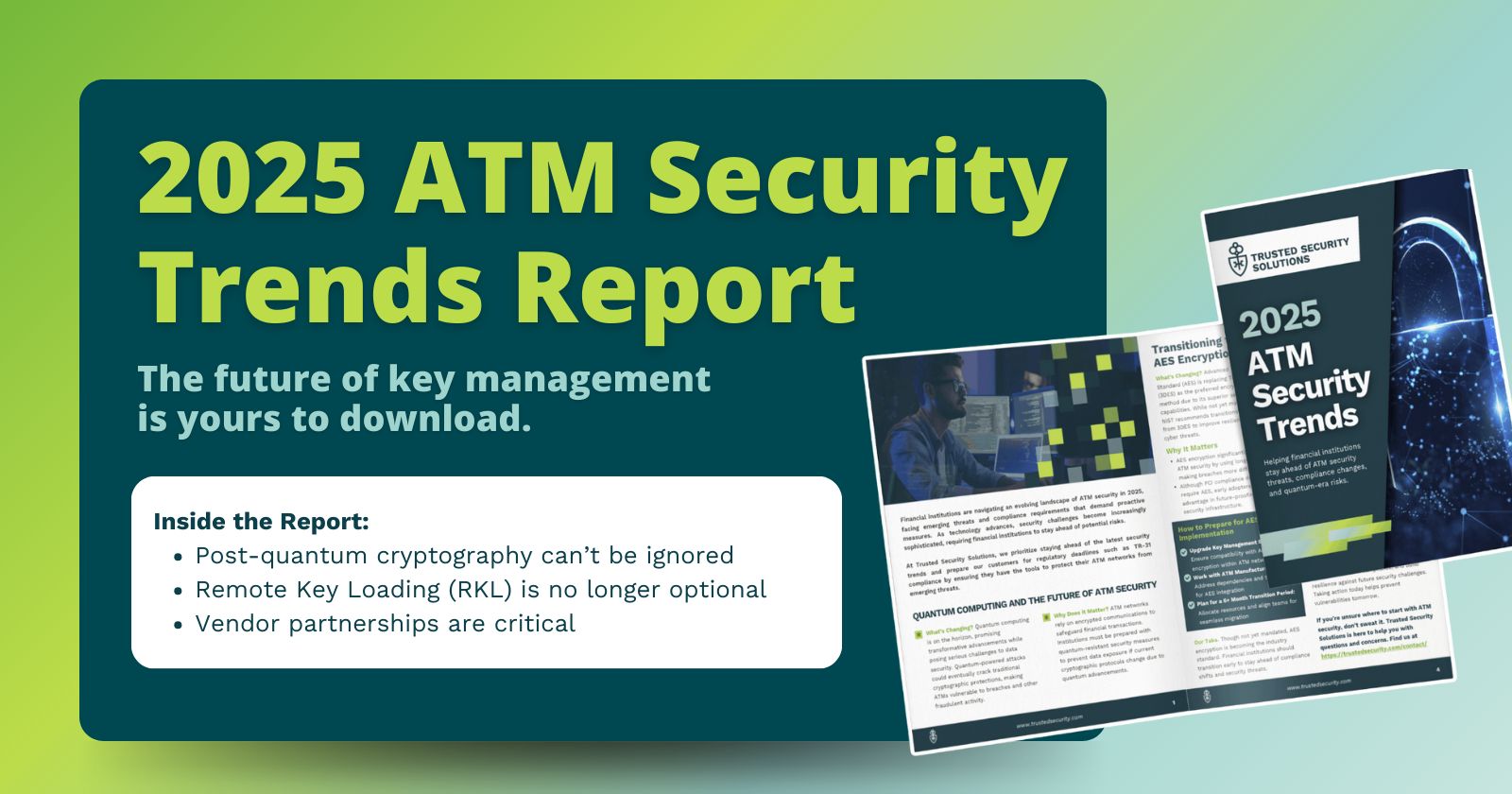
To help industry leaders prepare, we’ve released the 2025 ATM Security Trends Report—a comprehensive look at what’s happening now, what’s on the horizon and how banks, credit unions and processors can take proactive steps to secure their ATM networks.
The Current Landscape: Why ATM Security Is at a Crossroads
For years, the ATM industry has relied on traditional cryptographic methods and manual processes to manage keys. While these systems have been foundational, they’re increasingly vulnerable to evolving attack vectors and out of step with modern compliance mandates.
Here’s what’s changing:
- Regulatory bodies are enforcing change. PCI PIN mandates require migration to TR-31 and TR-34 standards, which modernize how institutions exchange and protect cryptographic keys
- Threat actors are growing more sophisticated. Logical attacks and PQC (post-quantum cryptography) risks expose weak points in legacy systems
- Institutions need operational efficiency. Manual key loading is no longer scalable, and inefficiencies add unnecessary risk and cost
The 2025 report highlights how these trends converge, creating risk and opportunity for organizations willing to act now.
Key Insights From the 2025 Report
While the full report goes deep into security protocols and technology shifts, here are a few critical themes worth noting:
- TR-31 and TR-34 compliance will shape the next decade. These standards move the industry away from insecure, manual processes and toward automated, asymmetric key exchanges. Early adopters will avoid the last-minute scramble that has plagued previous compliance transitions.
- Post-quantum cryptography can’t be ignored. Quantum computing is no longer theoretical—it’s advancing rapidly. Institutions must begin exploring PQC strategies now, or risk finding themselves unprepared for a cryptographic landscape that could shift overnight.
- Remote Key Loading (RKL) is no longer optional. RKL solutions enable institutions to securely and efficiently load keys across large ATM fleets without manual intervention. The efficiency gains alone are substantial, but the security and compliance benefits make it essential.
- Vendor partnerships are critical. The ecosystem is complex. Banks and credit unions must ensure their solutions are interoperable across different ATM manufacturers, processors and vendors. Trusted partners can help avoid costly missteps.
Why Institutions Should Act Now
ATM security is not a “wait until next year” challenge. Delaying migration or ignoring looming threats can lead to rushed projects, budget overruns and compliance violations. Proactive institutions are already investing in scalable key management strategies, assessing their networks for vulnerabilities and creating roadmaps for TR-31, TR-34 and PQC readiness.
The 2025 ATM Security Trends Report offers a roadmap for navigating this complexity. It doesn’t just highlight risks, it provides practical steps for institutions to strengthen their security posture while optimizing operational efficiency.
Download the full 2025 ATM Security Trends Report to get the insights you need to stay ahead of compliance requirements and protect your institution’s reputation.
