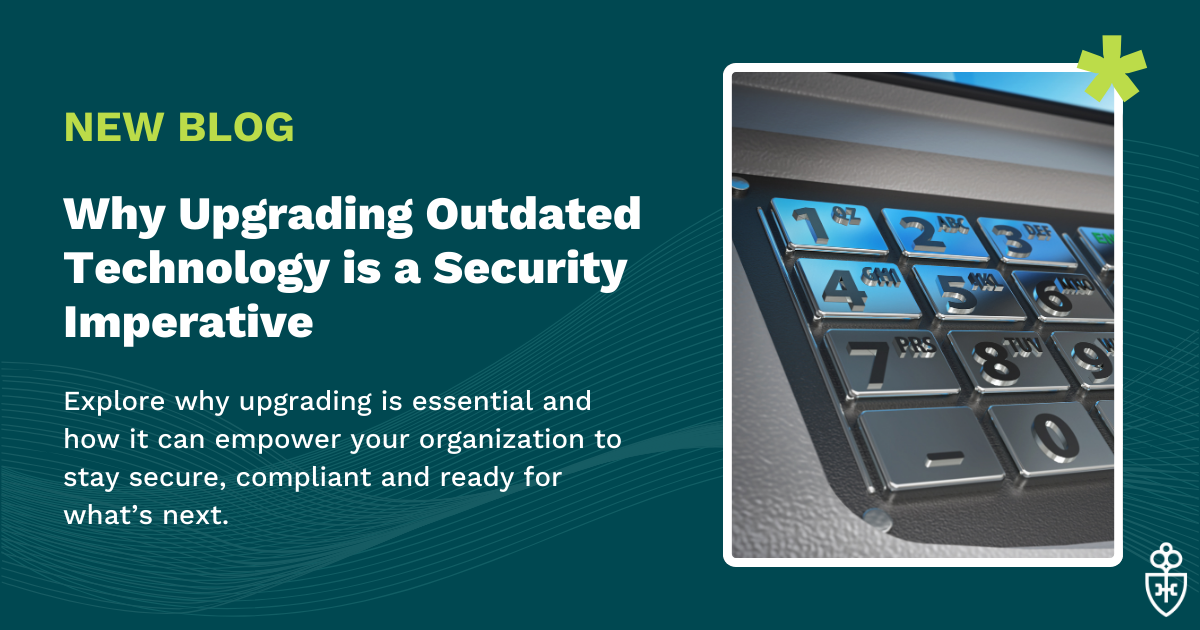
Future-Proofing Your ATMs: Why Upgrading Outdated Technology is a Security Imperative
ATM security isn’t what it used to be, and we’ve seen how fast the security landscape changes. With rapid technological advancements, rising security threats and ever-evolving compliance standards, sticking with outdated ATM technology can put your entire operation at risk.
At Trusted Security Solutions, we understand that upgrading your ATM network can seem daunting, but it’s a challenge we’re here to help you meet head-on. Let’s explore why upgrading is essential and how it can empower your organization to stay secure, compliant and ready for what’s next so you can protect your business, your customers and your peace of mind.
Enhanced Security: The Power of Remote Key Loading (RKL) over Manual Key Loading
Manual Key Loading (MKL) has been a foundational step in ATM security, offering a structured method for managing encryption keys. While it provides an adequate solution, MKL is inherently time-intensive and error-prone. Remote Key Loading (RKL), however, takes ATM key management to the next level, offering streamlined processes, better efficiency, and enhanced security.
Why Upgrade?
Modern ATMs support Remote Key Loading (RKL), a technology that allows cryptographic keys to be securely loaded over a network without physical intervention. RKL significantly reduces the risk of key exposure and eliminates the need for technicians to manually load keys at each ATM location. This not only enhances security but also improves operational efficiency.
How It Helps You:
- Reduced Risk of Human Error: Automated processes minimize mistakes
- Lower Operational Costs: No more on-site key-loading visits
- Enhanced Security Standards: Stronger protection against cyber threats and physical tampering
Think of RKL as a digital fortress for your ATM keys—invisible to intruders but always at your fingertips. Our A98 Remote Key Loading System is designed to provide dependable and secure RKL solutions, ensuring that your encryption keys remain protected and compliant with industry standards. Investing in modern security now can save you from headaches later.
Compliance Requirements: Meeting the TR-31 Standard
Legacy ATMs may not meet the latest compliance standards, particularly when it comes to key management and encryption. One critical requirement on the horizon is TR-31 compliance.
What is TR-31?
This standard dictates how encryption keys are formatted and managed securely. It ensures that key management practices across ATM networks are standardized and robust, making it harder for malicious actors to exploit vulnerabilities.
Why Upgrade?
- Avoid Penalties: Non-compliance can lead to fines and reputational damage
- Future-Proof Security: TR-31 compliance positions your network to handle upcoming regulations smoothly
- Customer Trust: Show your customers that their data is protected with the latest standards
Upgrading your ATM network to support TR-31 isn’t just advisable; it’s essential. Modern key management solutions, such as our A98 Key Management Platform, are designed to simplify compliance with TR-31 and other evolving standards. With our expertise and solutions, you can ensure your ATM network stays secure and compliant.
Preparing for the Future: Supporting Tomorrow’s Technology
As digital threats evolve, older ATM systems struggle to keep up with new technologies. Lacking the flexibility to integrate with new security protocols or the adaptability to support cloud-based services and AI-driven security solutions, legacy networks tend to create vulnerabilities and operational inefficiencies.
Why Upgrade:
Modernized ATMs are designed with the ability to adapt to technological advancements. Upgrading your ATM infrastructure today sets the stage for:
- Seamless Integration: Designed to integrate with future innovations, such as AI-driven security features and cloud-based solutions
- Operational Efficiency: Up-to-date hardware and software reduce downtime, maintenance costs, and the risk of unexpected failures
- Enhanced User Experience: Faster, more secure transactions improve customer satisfaction and loyalty
How It Helps You:
- Scalability: Easily integrate future upgrades without overhauling your system
- Efficiency: Streamline operations with cutting-edge technology
- Resilience: Protect against emerging threats before they become widespread
Investing in key management solutions like our A98 Comvelope System ensures your institution can easily adapt to future upgrades while maintaining robust security. Upgrading today means fewer headaches tomorrow. It’s paving the road ahead so your ATM network can cruise smoothly into the future.
How to Get Started with Your ATM Upgrade
- Assess Your Current System: Conduct a thorough audit of your ATM infrastructure, including hardware, software and key management practices
- Identify Compliance Gaps: Ensure your systems are aligned with TR-31 and other regulatory standards
- Plan for Remote Key Loading: Evaluate the benefits of RKL and consider implementing a solution like our A98 Remote Key Loading System
- Partner with Experts: Work with our trusted team who offers personalized expertise and responsive support
The Trusted Path Forward
The challenges facing ATM networks are becoming more complex. From cyber threats and quantum computing to new compliance standards like TR-31, the risks of relying on outdated technology are too great to ignore.
At Trusted Security Solutions, we’re here to guide you through every step of upgrading your ATM systems, supporting you with dependable solutions, responsive support and personalized expertise. Our tools make the process reassuringly seamless and secure.
With the right technology, you can protect your customers, comply with regulations and stay ahead of emerging threats. Don’t wait until it’s too late—future-proof your ATM network today.
Contact us to learn how we can help you upgrade with confidence and security.


Streamlining ATM Security: How the TSS A98 Comvelope System Simplifies Manual Key Loading
When it comes to ATM security, staying ahead of threats requires innovative solutions and streamlined processes. Financial institutions are increasingly adopting Remote Key Loading (RKL) systems to enhance security and efficiency. However, for ATMs that still rely on Manual Key Loading (MKL), there is a game-changing solution that can bridge the gap: Trusted Security Solutions’ (TSS) A98 Comvelope System.
Comvelopes not only simplify the manual key-loading process but also reduce operational complexity and the risk of human error. In this blog, we’ll explain how Comvelopes work, their benefits over traditional MKL, and how they provide a smoother transition for financial institutions on their path to RKL adoption.
What are Comvelopes, and How Do They Work?
A Comvelope is a specially designed, encrypted envelope that contains one component of an ATM encryption key. We generate and securely produce these Comvelopes, eliminating the need for in-house key generation equipment.
Unlike traditional key components, which are a matched pair and must be used together, Comvelopes are unique in that any two Comvelopes can be combined to form a secure key. This flexibility drastically reduces logistical challenges, allowing technicians to carry a stack of Comvelopes and efficiently service multiple ATMs in a single trip.
Once two Comvelopes are selected and entered into the ATM, they become tied together as key components, providing the same level of security as traditional methods but with greater ease and efficiency.
Traditional MKL vs. Comvelopes: Key Differences
Manual Key Loading (MKL) has long been the standard for ATM key management, but it comes with inherent inefficiencies and risks:
- Matched Pair Requirement: Traditional MKL requires using the exact two key components that were generated as a pair. If one component is lost or mismatched, the process is halted, leading to delays and potential security risks.
- Manual Complexity: The process involves multiple steps and personnel, increasing the likelihood of human error and requiring significant time and oversight.
In contrast, our A98 Comvelope System offers:
- Flexibility: Any two Comvelopes can be selected from thousands in storage, reducing the need for meticulous component pairing.
- Efficiency:
- Streamlined Compliance: Two technicians are still required to maintain compliance with dual control and split knowledge protocols, but each technician can carry multiple Comvelopes, enabling them to service several ATMs efficiently without the need to coordinate specific key pairs.
- Operational Speed: The ability to service multiple ATMs in one trip reduces downtime and improves network efficiency.
- Security:
- Unopened Comvelopes: The encrypted Comvelopes ensure that even if lost or intercepted, the key components remain secure.
- Reinforced Protection: The A98 system enforces dual control, requiring two technicians to provide a Comvelope when keying an ATM, adding an additional layer of security.
Benefits for Financial Institutions
- Operational Efficiency
Using Comvelopes reduces the complexity of key management by allowing greater flexibility in the field. Technicians can service multiple ATMs more efficiently, minimizing downtime and improving overall productivity. - Reduced Human Error
By eliminating the need for exact key component matching, Comvelopes simplify the process and reduce the chance of errors that could compromise ATM security. - Cost Savings
Financial institutions can save on labor costs and operational overhead with Comvelopes. Comvelopes streamline key generation, management and storage, reducing the resources needed for these processes. - Security and Compliance
TSS A98 Comvelopes meet strict security and compliance standards, including TR-31 requirements. Each Comvelope is encrypted and secure, ensuring financial institutions remain compliant with evolving regulations.
Supporting the Transition to Remote Key Loading (RKL)
While Comvelopes offer significant advantages for Manual Key Loading, the industry trend is moving towards Remote Key Loading (RKL) for even greater efficiency and security. Many financial institutions come to TSS for our A98 Remote Key Loading System, but they may still have a fleet of ATMs requiring manual key loading.
Comvelopes provide an intermediate solution that helps financial institutions maintain security and efficiency until they fully transition to RKL. The A98 platform offers flexibility, as the Comvelope solution can be easily upgraded to support RKL on the same fleet with software changes. Financial institutions also have the option to operate both Comvelopes and RKL simultaneously within the A98 system. By simplifying MKL, Comvelopes can reduce the burden on IT teams and ATM management while RKL upgrades are implemented.
Why Choose TSS for Your ATM Key Management?
At Trusted Security Solutions, we understand the challenges financial institutions face in securing their ATM networks. Our A98 solutions are designed to provide:
- Dependable Solutions: Proven systems that enhance security and efficiency
- Responsive Support: Personalized service to help you navigate key management challenges
- Expertise You Can Trust: Years of experience in ATM security and compliance consulting
Whether you’re looking to streamline your existing MKL process or transition to RKL, our A98 Comvelope System and Remote Key Loading solutions offer a secure, efficient and compliant path forward.
Conclusion
In an evolving landscape of ATM security, the A98 Comvelope System from TSS offers financial institutions a smart way to reduce complexity, save costs and maintain security. By allowing any two Comvelopes to form a secure key, the system eliminates the rigid constraints of traditional MKL and provides a smoother transition toward Remote Key Loading.
Ready to enhance your ATM security and operational efficiency? Get in touch with Trusted Security Solutions to learn how our A98 Comvelope System can support your key management needs and position you for future success.
Contact us today and discover how TSS can help you stay secure, compliant and efficient.

2025’s Biggest ATM Security Challenges and How to Prepare for Them
Financial institutions are facing a new wave of security challenges that affect ATM networks around the globe, especially as the digital landscape rapidly changes, seemingly by the minute. Staying ahead of the curve to safeguard sensitive financial information will require a forward-thinking approach in 2025 and beyond. From the threats of quantum computing used in cybercrime to stricter compliance requirements and essential technology upgrades, ATM security will feel more complex than ever in the new year.
At Trusted Security Solutions, we’re committed to staying ahead of the trends. In fact, we’re already working to prepare our customers for the looming TR31 deadline, which is just one of the storylines in 2025 that we’re watching closely. If you need help with TR31 compliance, contact us today!
Challenge #1: Quantum Computing Threats
What’s Happening: The advent of quantum computing is expected to revolutionize many areas of technology, but it also brings significant challenges to data security. Quantum computers, which are still in early development, can solve complex calculations far more efficiently than classical computers. This breakthrough capability could soon render traditional encryption methods obsolete, presenting an unprecedented threat to secure communications, including those within ATM networks.
Why It Matters: While quantum computing is not yet a mainstream threat, experts are concerned about its potential to disrupt current encryption methods. ATMs rely on encrypted communications to protect customer information and ensure transaction security. If traditional cryptographic protocols can be cracked by quantum-powered attacks, sensitive financial data may be exposed, and ATM networks may be at risk of breaches and fraudulent activities.
How to Prepare: Financial institutions should start planning for “quantum-resistant” encryption now, even though full-scale quantum computing is still a few years away. This may involve adopting post-quantum cryptographic algorithms designed to withstand quantum attacks. By investing in quantum-safe technology and working with vendors who prioritize cutting-edge security, institutions can prepare for a quantum-enabled future before it becomes a widespread threat.
Our Take: Post-quantum computing might feel like a sci-fi novel, but as we’ve seen with the explosion of generative AI and AI computing, it is likely closer than we think to becoming part of our daily lives.
Challenge #2: Compliance with New TR-31 Regulations
What’s Happening: As ATM security evolves, so do the regulatory standards designed to protect customers and financial institutions alike. In 2025, a key change will come in the form of TR-31 regulations, which set stricter requirements for key block management and encryption within ATM networks. These standards aim to create more secure, standardized encryption practices, ensuring the safe exchange and storage of sensitive data.
Why It Matters: Compliance with TR-31 regulations is essential for financial institutions to maintain the integrity of their ATM networks and avoid regulatory penalties. These standards impact the encryption protocols and key management practices that safeguard ATM operations. By aligning with TR-31, financial institutions can enhance security across their networks, reduce vulnerabilities, and build trust with customers by demonstrating a commitment to secure data handling.
How to Prepare: Preparing for TR-31 compliance requires a thorough assessment of current encryption protocols and key management practices. Institutions should consider adopting key management systems that are designed to meet TR-31 standards, such as the TSS A98 Key Management System. Working with experienced security partners can also help institutions navigate these new regulations and ensure a seamless transition to TR-31 compliance. Proactive planning now can prevent costly and disruptive changes down the line.
Our Take: January 2025 is right around the corner, and there are many financial institutions that are behind schedule. It’s not too late, but time is running out.
Challenge #3: Upgrading Outdated Technology
What’s Happening: Many ATM networks still rely on legacy hardware and software that may not support the latest security features or compliance standards. As technology advances, these outdated systems become more vulnerable to cyberattacks, malware and operational failures. Adding to this challenge is an increasing need to move towards cloud-based systems while maintaining compliance and security. Cloud migrations have been slow due to the need to maintain compliance when hosting data in the cloud. In 2025, consolidating equipment and upgrading these legacy systems will be critical to maintaining security and operational efficiency.
Why It Matters: Relying on outdated technology in ATM networks and data centers exposes financial institutions to numerous security risks. Older systems are often incompatible with modern security protocols and lack the flexibility needed to adapt to new threats. For instance, they may not support remote key loading (RKL) or other advanced key management techniques, making them more susceptible to unauthorized access. Or, most commonly, they might not support a migration towards cloud-based systems. Additionally, legacy systems may struggle to meet regulatory requirements, such as those outlined in TR-31, which compounds the risk of non-compliance.
How to Prepare: To ensure ATM networks remain secure and compliant, financial institutions should conduct a comprehensive review of their hardware and software infrastructure. Key steps include implementing modernized key management solutions, like the TSS A98, that support remote key loading and offer robust security features. Software updates, hardware replacements, and integration of encryption protocols compatible with emerging standards can also enhance resilience against future threats. By investing in a technology refresh, institutions can improve both security and customer experience.
Our Take: Network upgrades are expensive and time-consuming, but with TR-31 compliance, TR-34 not long after and the explosion of AI technologies, it seems likely that we will see more system upgrades in the next 2-3 years. It is critical to start conversations today that allow your organization to make adjustments as needed.
Conclusion
The security landscape for ATMs is rapidly changing, and 2025 promises to bring new challenges that require proactive planning and strategic investment. Quantum computing, TR-31 regulations, and technology upgrades represent just a few of the shifts that financial institutions must address to maintain robust ATM security.
By understanding these trends and taking early action, institutions can future-proof their ATM networks, ensuring compliance with evolving standards and building resilience against emerging threats. Preparing now, rather than reacting later, can mean the difference between a secure, compliant network and a vulnerable one.